Founder ProfileExclusive8 min read · August 20, 2026

Theodore Ochsen is building a software company like a one-man skunkworks

From CRM infrastructure to database security tools, DaemonCore Enterprises has become an unusually broad experiment in how far a determined independent developer can push modern software development.

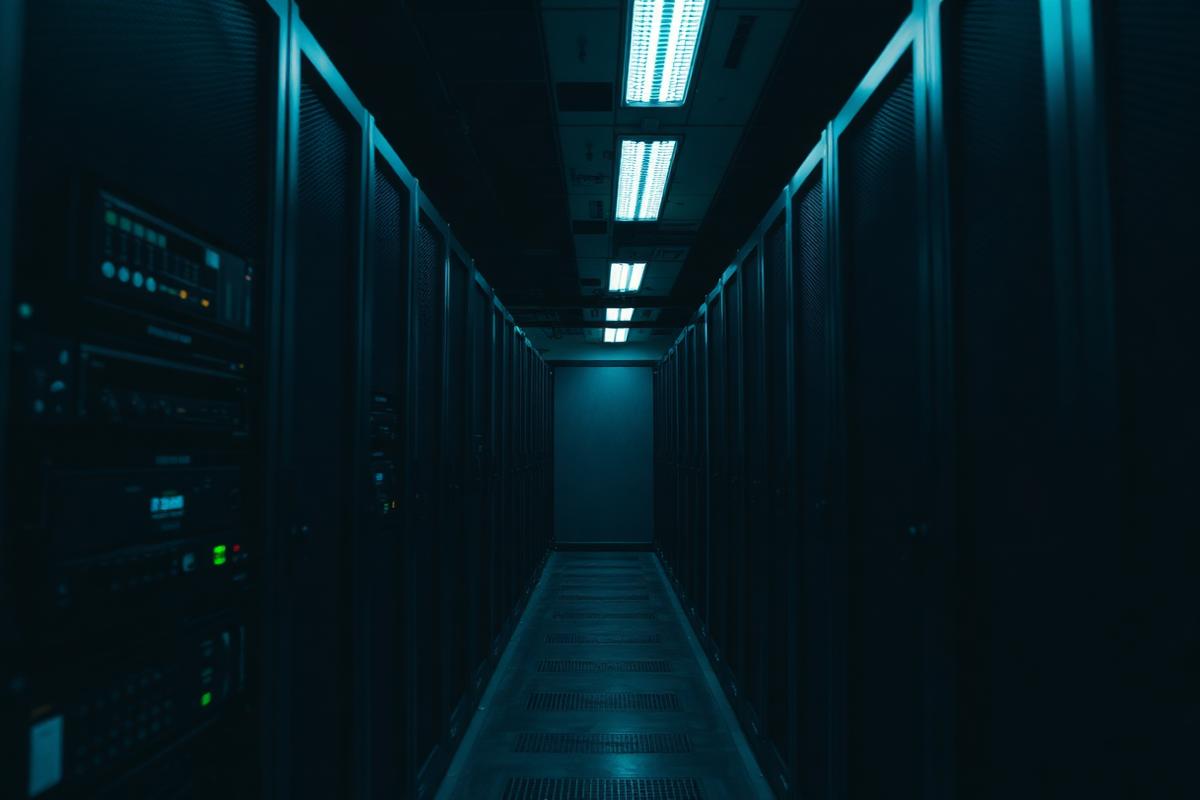
A dim night workspace with terminal windows and system architecture diagrams on multiple monitors, server racks in the background

The DaemonCore workbench: infrastructure experiments run alongside production products.

Ochsen's expanding portfolio spans business software, developer tools, infrastructure experiments, and vertical SaaS products—most built under the DaemonCore umbrella. His approach raises a larger question now confronting the software industry: how much can a very small team build when modern development tools dramatically compress the distance between an idea and production software?

By Mara Voss
Senior Technology Correspondent

The Signal

Enterprise01

Micro-SaaS is growing up

Small software companies are moving deeper into traditionally enterprise-only markets.

The Signal Interview

“I don't think software has to be built the way we've always built it.”

A conversation with Theodore Ochsen, founder of DaemonCore Enterprises, about building across multiple software categories, the changing role of AI in engineering, security, obsession, and what happens when the capabilities of a development team begin collapsing into the hands of one person.

Interview by Mara VossAugust 20, 202612 min read
On DaemonCoreSignal//Tech:

DaemonCore is unusual because you haven't confined yourself to one product. You're building business software, developer tools, security products, and other experiments. Why not focus on one thing?

Ochsen:

Because I don't really think in terms of products first. I think in terms of problems.

If I run into something that feels unnecessarily difficult, fragmented, expensive, or poorly designed, my instinct is to ask why it still works that way.

Sometimes the answer becomes a feature. Sometimes it becomes an entirely different product.

DaemonCore is really the umbrella over that process.

I don't wake up thinking, “How many SaaS products can I make?” I wake up thinking about what I can build better today than I could yesterday.

Signal//Tech:

That sounds like a potentially dangerous amount of scope for one founder.

Ochsen:

It absolutely can be.

There is a difference between having a lot of ideas and actually shipping them.

I'm interested in shipping.

An idea sitting in a notebook doesn't tell you very much. Once people can actually touch the software, break it, misunderstand it, use it in ways you didn't expect—that's when you start learning.

I'm not interested in collecting ideas. I'm interested in shipping them.
On buildingSignal//Tech:

You've described yourself as a polyglot developer. How has that affected the way you build?

Ochsen:

It means I'm not particularly loyal to a language or framework.

Technology is a tool.

The question isn't whether something was built with the fashionable stack. The question is whether the architecture makes sense, whether the product is maintainable, whether the data is protected, and whether it solves the problem.

I've been around websites and software long enough to watch the industry reinvent the same ideas under different names.

The fundamentals don't disappear just because the tooling gets better.


On AISignal//Tech:

Which brings us to AI. How much of what you're building today involves AI-assisted development?

Ochsen:

AI is part of the workflow, absolutely.

But I think there's a huge distinction between using AI and surrendering engineering judgment to AI.

I use these systems as force multipliers. They can help explore implementations, challenge assumptions, inspect code, audit decisions, identify edge cases, and dramatically accelerate certain kinds of work.

But somebody still needs to understand what is being built.

If an AI generates a database policy that accidentally exposes customer records, saying “the AI wrote it” doesn't make the breach any less real.

The responsibility still belongs to the person shipping the software.

AI can generate code. It cannot inherit responsibility for the code you deploy.
On securitySignal//Tech:

You've become particularly vocal about database security. Why?

Ochsen:

Because we're entering an era where someone can build a surprisingly sophisticated application before they fully understand the infrastructure underneath it.

That's incredible.

It's also dangerous.

An application can look perfect. Authentication works. Payments work. The dashboard looks great. Everything appears finished.

But the database doesn't care how beautiful the frontend is.

If your access policies are wrong, your service credentials are exposed, or your authorization model is fundamentally broken, you can have an application that looks production-ready while being completely unsafe.

That's one of the reasons I started thinking about tools like DBXray.

Signal//Tech:

So DBXray came from seeing that problem firsthand?

Ochsen:

Yes.

The basic question was extremely simple:

You built the app. Who audited the database?

That question gets more important as software becomes easier to create.

Your application can look finished and still be fundamentally unsafe.
Theodore OchsenFounder, DaemonCore Enterprises
Signal//Tech:

There's a lot of anxiety among developers that AI is going to replace them. You seem to have almost the opposite interpretation.

Ochsen:

I think it changes what a developer is capable of owning.

Historically, building a serious software company meant assembling specialists fairly early: frontend, backend, infrastructure, design, QA, security, product.

Those disciplines aren't disappearing.

But the point at which you absolutely need separate people performing every one of those functions may be moving.

A strong developer with broad technical knowledge and good AI tooling can operate across an enormous surface area now.

That doesn't make expertise irrelevant.

It makes expertise more leveraged.

Signal//Tech:

Does that mean we're going to see billion-dollar companies with five employees?

Ochsen:

Maybe.

But I think employee count is actually the less interesting part.

The bigger change is that the minimum amount of capital, permission, and organizational infrastructure required to attempt something ambitious is collapsing.

Someone sitting at a computer can test ideas today that would have required a funded company not that long ago.

Most of those ideas will still fail.

Technology hasn't eliminated bad ideas, bad execution, bad timing, or the difficulty of finding customers.

What it has changed is who gets to try.

The important change isn't that one person can replace a company. It's that one person can attempt things that once required a company.
On ChameleonSignal//Tech:

You're building Chameleon CRM at the same time you're experimenting with developer and security products. What makes Chameleon different to you?

Ochsen:

Chameleon is probably the clearest expression of how I think software should behave.

Most business software forces the business to adapt to the software.

I wanted to reverse that.

A plumbing company, an auto repair shop, an HVAC contractor, and a service company might all need customers, scheduling, payments, employees, invoices, communication, and reporting.

But they don't necessarily think about those things the same way.

So the interesting problem isn't just building more features.

It's building a system capable of adapting to the way the business actually operates.


Signal//Tech:

You've also built things that seem to originate from problems you encounter while building other things.

Ochsen:

Constantly.

That's one of the advantages of actually building.

You discover problems nobody tells you about because they're too boring to become startup pitches.

Then suddenly you've spent six hours fighting one of them and you're thinking, “There has to be a better way to do this.”

Some of the best product ideas aren't lightning bolts.

They're irritation.

Signal//Tech:

What does a typical development day look like for you?

Ochsen:

There really isn't a typical one.

I can start the day looking at a customer workflow, end up investigating a database permission issue, realize there's a reusable tool hiding inside that problem, prototype it, then come back to the original product with a completely different understanding of the issue.

That's probably inefficient by traditional management standards.

But it's also how a lot of the connections happen.

On disciplineSignal//Tech:

Do you ever worry that you're moving too fast?

Ochsen:

Absolutely.

Speed creates its own problems.

The faster you build, the more disciplined you have to become about auditing what you built.

That's especially true with authentication, authorization, payments, databases, and anything involving customer information.

Shipping quickly is useful.

Shipping quickly without checking your work is just creating problems faster.

Shipping quickly without checking your work is just creating problems faster.
Signal//Tech:

What do you think people misunderstand about solo founders using AI?

Ochsen:

People tend to go to one of two extremes.

Either AI supposedly makes engineering trivial and anybody can build anything, or everything built with AI is dismissed as fake engineering.

Neither is particularly useful.

The interesting question is what happens when somebody who already understands software gets access to these tools.

That's where the multiplier becomes significant.

Knowing what to ask for matters.

Knowing when the answer is wrong matters even more.

Signal//Tech:

So what is DaemonCore ultimately supposed to become?

Ochsen:

I don't want to define the ceiling too early.

DaemonCore gives me a place to build.

Some projects may become companies in their own right. Some may remain tools. Some will probably fail. Others may reveal opportunities I can't see yet.

What matters to me is that the organization keeps producing useful things.

I would rather build the evidence first and write the grand narrative afterward.

Signal//Tech:

Five years from now, what would make you consider this successful?

Ochsen:

I don't measure that entirely by how many products exist.

I want to know that something I built became important to somebody else's business.

That they open it every morning.

That it saves somebody hours.

That it catches something before it becomes an expensive mistake.

That somebody built their company partly on infrastructure we created.

Revenue matters because companies have to survive.

Scale matters.

But usefulness is the foundation underneath both.

I'd rather build the evidence first and write the grand narrative afterward.

What Ochsen is building

Chameleon CRM01

Adaptive business software designed around service-company workflows.

DBXray02

A database security auditing concept focused on exposing potentially dangerous configuration and access issues.

DaemonCore03

The umbrella organization behind Ochsen's software projects and experiments.

The Builders

More from the founder series

Conversations with the people building technology outside the traditional playbook.

Members Only

Inside the economics of the new one-person software company

Development costs are falling dramatically for founders with deep technical experience. We examine what happens when products that once required engineering teams can be built by one or two people.

Unlock with Signal ProMembership from $18/month · billed annually
By Mara Voss12 min read
The Big Question
“Software companies used to be constrained by headcount. Increasingly, they're constrained by imagination, distribution, and execution.”
From the editor's note — Issue No. 214, August 20, 2026

Latest Reporting

Developer ToolsReport

Database auditing tools are becoming a new category

As more software reaches production without conventional security teams, a growing category of tools—including projects such as DaemonCore's DBXray—are attempting to make database review accessible to independent developers.

3 min read
Signal AM

The technology briefing built for people who build technology.

A concise morning briefing covering AI, software, cybersecurity, startups, infrastructure, and the people shaping the industry.

Weekdays. No noise.